At a glance
TWO MINUTES
What's actually right for your kid?
Answer a few questions and we'll sned you what you're actually looking for.
One important caveat: from our research, many of the most recognized names in kids' coding and robotics are national or regional chains, and instructor quality vary dramatically from branch to branch. The reputation a franchise built winning competitions in Texas — or anywhere else — doesn't guarantee your local location has the same experienced coaches or competitive team culture. We've done our best to surface the strongest options currently active in the Bay Area, but always visit, ask about your specific instructors, and talk to local families before enrolling.
On screen time: Programs using LEGO Spike, VEX IQ, Arduino, or Raspberry Pi involve significant physical building and sensor work, so they tend to have a much better hands-on/screen balance than pure game design or Scratch classes. Read how to choose Coding & Robotics Programs with the least screen time.
Coding and Robotics Schools in SF
After scool classes and programs for kids to learn logical thinking and machine learning in San Francisco
SF Tips: TheCoderSchool is the clearest year-round skill-building option. For younger kids exploring tech for the first time, TechKnowHow camps are a low-stakes entry point. Planning ahead for summer? See our top Bay Area STEM summer camps guide for SF-accessible options.
Coding School for Kids in Peninsula
Coding classes, robotics camps, and STEM programs offered in Menlo Park, Burlingame, Los Altos, and Palto Alto
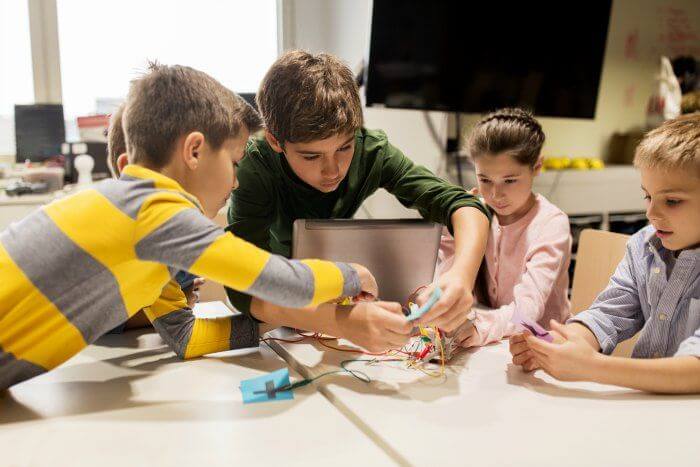
Peninsula tip: One of the strongest regions in the Bay Area for robotics. If you're deciding between iCode and Magikid, iCode is the better entry point; Magikid is stronger if your child already knows they want to compete. Our programs page lists Peninsula robotics competitions and VEX events your child can attend to test the waters before committing. Competition Winners rarely rely on school alone; they build their advanced technical foundations through STEM camps and weekend STEM practices. Families who prioritize hands-on building year-round may also want to look at Bay Area private schools with dedicated maker and AI labs.
🔋 Between camp sessions, a simple home routine keeps the momentum going — try this 3-week no-prep STEM plan.
Coding School for Kids in South Bay
Hands on workshop, and coding programs in San Jose, Santa Clara, Los Gatos, and Sunnyvale
South Bay Insider Tips. FutureBytes' buy-by-the-day flexibility is genuinely rare — and one of the smartest ways to test your child's interest before locking in a semester commitment. For hands-on kids who need a real screen break, Maker Nexus is the standout pick; there's simply nothing else like it in the region. If your child is showing serious long-term interest in engineering or AI, several South Bay private schools now offer dedicated maker labs and AI tracks worth exploring. And don't sleep on the community programs — Stanford and other institutions run some surprisingly competitive free and low-cost options for middle and high schoolers that most families never hear about. For everything else — camps, STEM events, and after-school programs — browse our full South Bay program guide.
TWO MINUTES
What's actually right for your kid?
Answer a few questions and we'll sned you what you're actually looking for.
Coding for Kids in East Bay
Coding, robotics, and engineering-focused programs in Berkeley, Oakland, and Lamorinda
East Bay tip: Berkeley's theCoderSchool stands out in the franchise for its ownership credentials. For competition-track families in Fremont, ACF is the most accessible serious option nearby. If you're exploring schools rather than programs — the East Bay has some interesting options in our AI-era private schools guide worth a look.
Coding for Kids in TriValley
Coding, robotics, and STEM schools across Danville, San Ramon, Dublin, and Pleasanton
Tri-Valley tip: For serious, structured coding, YoungWonks (Pleasanton) is WASC-accredited and nationally award-winning, drawing students from Pleasanton, Dublin, Fremont and beyond.
If your child needs a gentler, more personalized pace, theCoderSchool San Ramon's 2:1 coaching is the softer on-ramp.
For competition families, Dublin Robotics Club brings credentials many programs can't match — real alumni VEX wins and one-on-one mentoring, with the most hands-on, screen-light building for younger kids before the code-heavier FTC track. For summer, see our top Bay Area STEM summer camps guide.
If your child needs a gentler, more personalized pace, theCoderSchool San Ramon's 2:1 coaching is the softer on-ramp.
For competition families, Dublin Robotics Club brings credentials many programs can't match — real alumni VEX wins and one-on-one mentoring, with the most hands-on, screen-light building for younger kids before the code-heavier FTC track. For summer, see our top Bay Area STEM summer camps guide.
AI SAfety & Kids


What Bay Area Parents Ask About Coding Classes
Q: What is the right age for kids to start learning robotics?
- Many kids discover their passion through a summer camp first —
explore the best summer camps near youto find one in your neighborhood. - Ages 6–8 (Foundational): Ideal for introductory platforms like LEGO Spike Essential; matches early developmental motor skills and basic drag-and-drop block logic.
- Ages 9–10+ (Competitive): Recommended for entry into structured VEX IQ, Arduino hardware wiring, or official First Lego League (FLL) tournament brackets.
Q: Which coding and robotics programs have the least screen time?
- Applied Computing Foundation, Magikid, and Maker Nexus require physical assembly, chassis prototyping, and manual tool manipulation.
- Standard Scratch, Roblox Studio, or Python game design paths keep students entirely bound to stationary monitors.
Q: Are chain programs better than local independent ones?
- National Franchises: Providers like theCoderSchool offer broad location convenience, but local instructional consistency varies wildly by branch.
- Independent Labs: Regional hubs like YoungWonks or Applied Computing Foundation consistently maintain higher tech-industry mentor retention, specialized physical lab assets, and localized, high-performing competitive rosters.
Q: Which programs are best for competitions like FLL or VEX?
- Elite Tournament Stables: Applied Computing Foundation and YoungWonks lead Northern California brackets, backed by proven, multi-year national innovation titles.
- Developmental Pathways: Magikid offers structured entry into localized junior VEX circuits.
- The Catch: Requires rigorous, non-negotiable family commitments from September through winter regional finals.
Q: How much do after-school coding classes cost in the Bay Area?
- Standard Enrichment: Expect $280 to $450 every 4 weeks for weekly 1.5-hour sessions at premier local hubs.
- Competition Teams: High-tier tournament tracks like Applied Computing Foundation command $350 to $550 monthly, reflecting specialized components and custom fields.
- Value Tip: Most platforms offer waived registration promos during seasonal rollouts.
Q: Why should kids learn coding if AI can write code?
- The Shift: AI tools automate syntax, but building physical systems requires structural logic, deep debugging resilience, and complex architectural engineering.
- The Goal: Learning code forces children to master logic engines conceptually, shifting them from passive technology consumers into managers who can direct AI models effectively explore summer camps, STEM weekends, and afterschool programs that build these skills →
%20(300%20x%20250%20px)%20(1).avif)