
If you live in the Bay Area, you've probably noticed an interesting divergence in how people approach school technology.
On one side, we're seeing the rise of expensive, bare-bones "AI micro-schools" — programs charging premium tuition because parents want their kids to have early exposure to advanced tech.
At the exact same time, many of the same tech executives from Google, Apple, and Yahoo are paying top dollar to send their own children to the Waldorf School of the Peninsula in Los Altos. If you've ever toured it, you know it looks entirely low-tech: classrooms filled with physical books, blackboards, and notebooks, personal screens restricted until middle school.
When asked about the rule, Alan Eagle, a communications executive at Google whose kids attended, famously told The New York Times: "The idea that an app on an iPad can better teach my kids to read or do arithmetic, that's ridiculous."
These parents aren't anti-technology. They built the platforms. They simply want their kids to develop deep cognitive focus, math logic, and real-world social skills before they get swallowed by an interface.
Managing this at home doesn't require a philosophical crisis. It just requires a clear boundary:
Phones out does not mean technology out. It means removing passive distraction devices while protecting space for active creation tools.
👉 Before diving into the global picture, here's what Bay Area districts are actually doing — the policies vary wildly by zip code. The science behind why the replacement matters as much as the ban is in our MRI research breakdown, and what Denmark figured out about balancing academic outcomes with genuinely happy kids is the clearest model we've found.
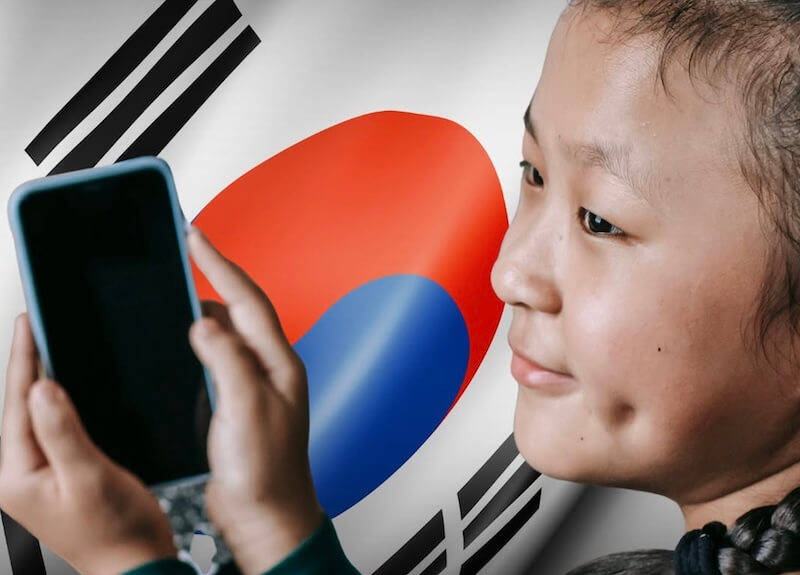
This post looks at the countries that moved first — Singapore, South Korea, and Taiwan — to see how they balance phone bans with raising tech-literate kids.
The Countries That Moved First
Most media coverage treats phone bans like a single, sweeping anti-tech movement. It's not. High-performing STEM countries aren't throwing computers in the trash. They are surgically separating personal distraction from structured engineering.
Singapore: Phones in Lockers, AI in Classrooms
What Changed
Starting January 2026, Singapore banned personal smartphones and smartwatches during all school hours — including recess and lunch. Government-issued student tablets had their default sleep timer moved from 11pm to 10:30pm.
What They Kept and Built
Here's what most coverage misses.
School-issued devices for structured lessons stayed. Coding programs expanded. And Singapore's Ministry of Education rolled out a scaffolded, age-tiered AI curriculum that looks nothing like letting kids prompt a chatbot.
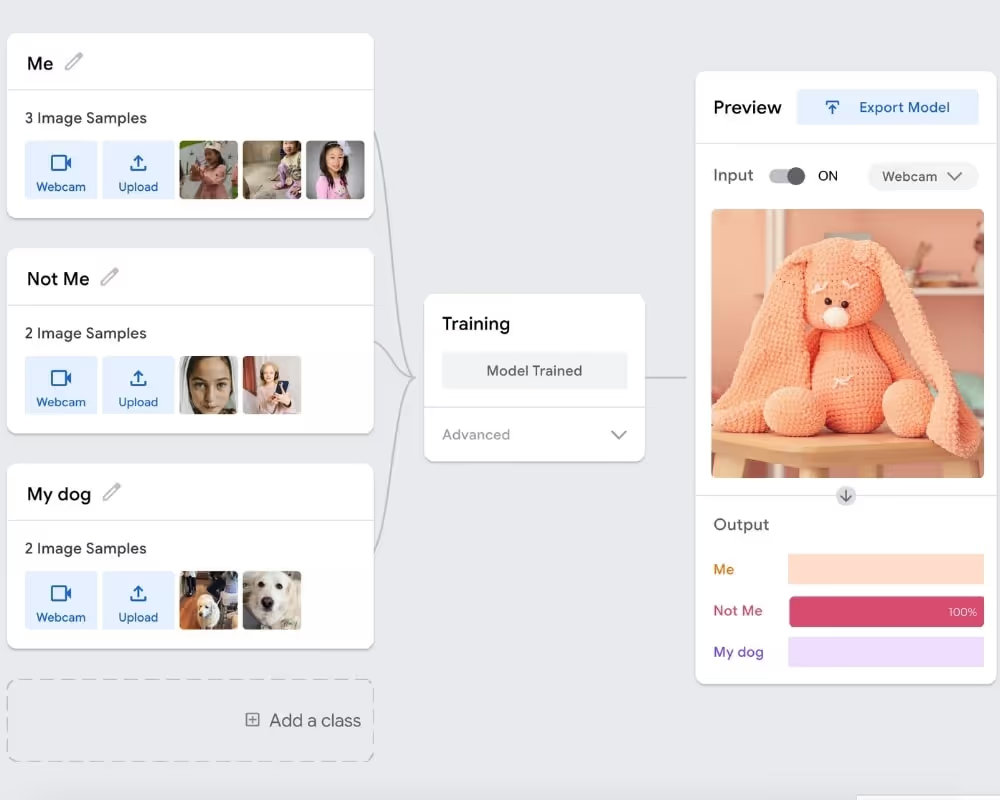
Primary 4–6 (ages 10–12): Students use block-based coding paired with basic machine learning extensions to train their own simple visual models. They learn how data training sets work before they ever touch a finished AI product.
Secondary school (ages 13+): Students use AI as a debugging partner for code they write themselves — not to generate answers. The machine checks their logic. It doesn't replace it.
The phone went away. The thinking tool stayed. That's a deliberate distinction.
Singapore also paired the ban with Cyber Wellness lessons explaining why the limit exists. Students are more likely to buy into limits when adults explain the reasoning instead of simply confiscating the device.
What Students Said
"Before, a lot of people used to play video games on their phones, they didn't really talk to each other. But now, since the ban has been implemented, a lot more people have been talking to each other, the canteen is livelier."— Dyuthi Bhatt, Secondary 3 student, CNA, January 2026
"I find it better because at least we won't be that antisocial."— Lucas Phillips, Secondary 2 student, CNA, January 2026
Bay Area Parent Takeaway: Singapore banned the delivery vehicle for brain-melting algorithmic feeds and doubled down on actual computer science. A child training a machine learning model is doing something fundamentally different from a child asking ChatGPT to write their essay. That distinction is one Bay Area families can make at home — no school policy required.

South Korea: The Cautionary Tale of Rushed AI
The Phone Ban — Accepted Broadly
South Korea banned phones in classrooms effective March 2026 with near-unanimous political support (115 of 163 lawmakers voted in favor). After surveys showed 43% of Korean teens were heavily smartphone-dependent, nobody argued much.
The AI Textbook Push — A Trainwreck
South Korea began rolling out AI-supported textbooks in 2025 across elementary and middle school math, English, and computer science. The government promised personalized learning that would reduce dependence on expensive private tutoring.
The result:
- 72% of teachers reported dissatisfaction with quality and usability
- A Ministry of Education report showed no significant academic improvement versus traditional methods
- Lawmakers stripped the software of its official textbook status
- Adoption crashed from 37% to 19% in one semester (Rest of World, December 2025)
"Research shows that you're going to get the best outcomes in teacher-centered classrooms. Anything trying to move too quickly, focusing on just the technology without adequate support for professional development, risks undermining that."— Alex Kotran, founder, AI Education Project, Business Insider, August 2025
South Korea's AI textbooks were passive — students interacting with pre-arranged content on a screen, without teachers prepared to guide them. That's not meaningfully different from the phone use they were trying to replace. It's lazy tech with a better marketing budget.
The Distinction That Matters
When AI makes kids less capable:
- Copy-pasting homework answers
- Passive Q&A without thinking problems through
- More isolated screen time with a better label on it
When AI makes kids more capable:
- Building a game or app from scratch
- Debugging their own code with AI as a logic checker
- Writing and revising — with AI as editor, not author
- Designing a science project, testing hypotheses with AI assistance
Bay Area Parent Takeaway: AI tools don't automatically improve learning. Teacher guidance and quality of engagement matter more than the tool. The question isn't whether your child uses AI. It's whether they're consuming it or creating with it.
Taiwan: High Achievement, Tighter Phone Rules
In May 2025, Taiwan's Ministry of Education announced a phone ban effective September 2025 covering all grades from high school and below. Devices are collected and centrally stored during class hours. (Taiwan News, May 2025)
Taiwan consistently ranks top 5 globally for PISA math. It reached consensus across local governments before implementing — the same challenge California is navigating now, except Taiwan actually got there.
Bay Area Parent Takeaway: Academically ambitious countries are not giving kids unlimited device access in the name of digital fluency. Their academic results aren't suffering for it.
👉 The Bay Area district breakdown is here if you want the local picture first. This post is about what the countries that moved earlier actually learned — and whether the brain research and Denmark's results hold up when you look at PISA scores and happiness rankings side by side.
The Data: STEM Scores, Happiness, and Screen Rules
Two things stand out in this data.
First: Many high-performing systems on PISA have moved to restrict personal smartphones. Sustained attention is a prerequisite for learning — and these countries decided they're not willing to trade it for device familiarity.
Second — the part nobody talks about: Academic rankings and youth happiness rankings don't match.
Singapore is #1 academically. Its youth under 30 rank 54th in happiness globally. South Korea is top 5 academically and 52nd in happiness. Denmark — physical textbooks, outdoor time, face-to-face learning alongside purposeful technology — sits top 3 for youth happiness and above the OECD academic average.
The lesson isn't "don't aim high." It's that how you pursue achievement matters as much as the outcome. We covered what Denmark did differently — and what Bay Area parents can borrow — in our Denmark post. The brain science behind why the type of screen time matters is in our MRI research breakdown.
California: The Fragmented Wild West
While Sacramento passed the phone ban, the AI curriculum side is a different story.
In September 2024, California passed AB 2876 — the AI Literacy Law, authored by Assemblymember Marc Berman of Menlo Park — requiring the state's Instructional Quality Commission to incorporate AI literacy into math, science, and social science curriculum frameworks at their next revision. The bill covers how AI works, its core concepts, applications, limitations, and ethical considerations.
Good law. But here's the catch: it's guidance and framework direction, not a standardized enforceable curriculum with a fixed implementation date.
The result is predictable. One high-wealth Peninsula district is already piloting data science electives and prompt engineering. The school three miles away treats AI mainly as a plagiarism risk to block on the campus Wi-Fi.
Both are following the guidelines. Neither is Singapore.
This gap is real — and it's why Bay Area families who make the distinction between distraction tech and creation tech at home have an advantage that doesn't depend on which district they landed in.*
👉 What Bay Area schools are actually doing this fall varies more than most parents realize. This post focuses on the countries that moved first. If you want the brain science behind why what replaces the phone matters, that's here. And if you're weighing which schools have built this philosophy into how they actually teach, Denmark's approach is worth reading first.
What Bay Area Families Can Do Now
The One Question That Cuts Through Everything
Is my child consuming — or creating?
Singapore collected the phones and kept the coding class. South Korea tried to replace one screen with another and it failed. California banned the phone but left the replacement question to every individual school board. The Waldorf executives understood something simpler: attention is a prerequisite for building anything worth building.
If your kid suddenly has 40+ minutes of phone-free time a day — roughly the average amount schools are reclaiming — here's how to fill it with something that doesn't rot their brain:
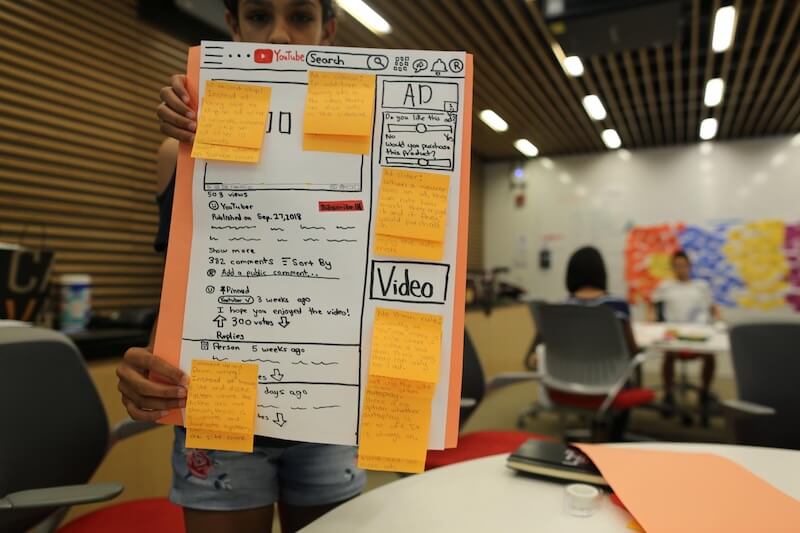
- Coding and robotics programs — your child builds something, not just watches
- Hands-on AI activities — AI as a creative tool, not a homework shortcut
- STEM events this weekend — face-to-face, hands-on, Bay Area
- Free Bay Area museum days — screen-free and genuinely engaging
- 2026 STEM summer camps — check availability now
At AIFunLab, we help Bay Area families turn phone-free time into hands-on AI and coding projects — the creation side of the equation. If you're evaluating which schools take this distinction seriously, Bay Area private schools and AIFunLab's full resource guide are good starting points.
One practical move for today: set a device sleep timer. Singapore moved government student tablets to a 10:30pm cutoff. On iOS, Screen Time does this in two minutes. On Android, Family Link does the same.
Parents Also Ask
Is it true that Silicon Valley executives send their kids to screen-free schools?
Yes. Tech executives from Google, Apple, and Yahoo frequently send their children to local screen-free institutions like the Waldorf School in Los Altos. Industry leaders intimately understand how addictive these platforms are, consciously choosing to protect their own children's early attention spans so they learn to think and build before they scroll.
What happened when South Korea tried AI textbooks?
The 2025 pilot program failed, with school adoption dropping from 37% to 19% in a single semester. Lawmakers stripped the software of its official status due to massive teacher dissatisfaction and flat test scores. Replacing traditional paper with passive digital screens proved entirely ineffective without specialized teacher preparation.
Did Taiwan ban phones in schools?
Yes. Taiwan's Ministry of Education implemented a mandatory, centralized phone ban covering all student grades starting in September 2025. Personal devices are collected for safekeeping during school hours. Notably, Taiwan successfully balances this strict distraction-free policy while consistently ranking among the top five globally for international math performance.
Should Bay Area kids still learn AI if schools are reducing phones?
Absolutely. The style of digital engagement matters most. Phone bans intentionally target passive video consumption and cheating. Learning to code, debug scripts, or train original machine learning models represents an active, structured engineering skill that parents should continue to encourage at home to build true, long-term technical literacy.
How should a Bay Area parent balance the phone ban with AI skills at home?
Stop treating "screen time" as one category. Audit the input. If your kid is using AI to generate homework or scrolling short-form feeds — cut it. If they're using AI to debug code they wrote, prototype a design, or brainstorm and revise their own work — that's what high-performing countries are actively protecting. Coding programs and AI creation activities are the practical equivalent.
Read Part 1: California Just Banned Phones at School. What That Actually Means Depends on Where You Live →
The brain science behind why the type of screen time matters: What MRI Studies Show About Screen Time and Child Brain Development →
What Denmark figured out: What Denmark Knows About Your Child's Brain →
Souces.
"Starting January 2026, Singapore banned personal smartphones and smartwatches during all school hours — including recess and lunch — according to a Singapore Ministry of Education press release from November 2025."
"Adoption crashed from 37% to 19% in one semester, according to Rest of World's December 2025 investigation."
"South Korea passed a classroom phone ban with 115 of 163 lawmakers voting in favor, per TRT World reporting in August 2025."
"Taiwan's Ministry of Education announced a phone ban effective September 2025, per Taiwan News."
"The largest U.S. study ever of school phone bans — covering more than 40,000 schools — found test score effects close to zero in the short term."
"California passed AB 2876, the AI Literacy Law, signed by Governor Newsom in September 2024."
"Singapore ranks #1 globally in math, reading, and science according to OECD PISA 2022."
"Denmark sits top 3 globally for youth happiness, per the World Happiness Report."

Bay Area native, Cal grad. Raising a kid who doesn't sleep easily, which is why we've tried as many sports and camps as we can.

%20(300%20x%20250%20px)%20(1).avif)



-min.avif)