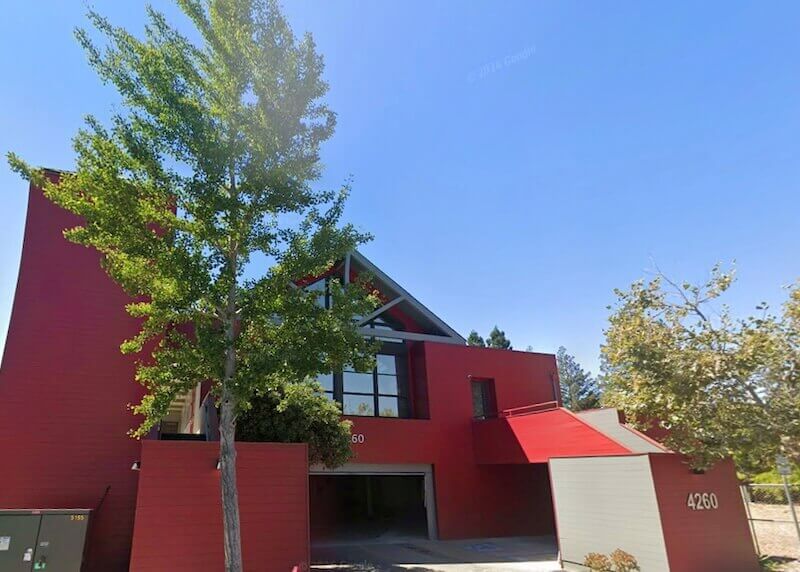
Bay Area parents we speak with are spending $1,500–$2,500 a month on after-school programs — on top of $40,000–$55,000 for private school tuition. Alpha School asks $75,000. We met co-founder MacKenzie Price in Palo Alto in April 2026 and spoke with families on both sides of the enrollment decision.
How much is Alpha School in Palo Alto and Piedmont, and when do they open?
All three are leased commercial units with no gym, field or lab. As of August 2026 neither new campus has a Niche entry, and Alpha's Palo Alto Yelp listing is unclaimed with zero reviews.
Looking at Alpha outside California? Our Austin, Miami and New York review covers those campuses. Weighing Alpha against established local options? Our complete Bay Area private school list covers every region, plus focused guides for gifted and advanced learners, bilingual and immersion programs, and dyslexia and learning differences.
Alpha School Palo Alto: What We Know Before It Opens (Fall 2026)
The site is 4,800 square feet, a short drive from Google, Apple and LinkedIn. That is the whole campus. No courtyard, no field, no lab. If your mental image of a $75,000 school involves a quad, adjust it now rather than on tour day.
When we met MacKenzie Price in Palo Alto in April 2026, she told us the campus was already waitlisted months ahead of launch and that Alpha was scouting a Marin location. She also offered to send data and arrange a campus visit. As of August 2026, neither has arrived — more on that in our full investigative review.
Alpha East Bay in Piedmont: $65,000, Opening Fall 2026
Before Alpha took it over, the space housed Academia de Mi Abuela, a local Spanish-immersion preschool. The building sits entirely inside the real estate footprint of Zion Lutheran Church. Alpha leased a neighbourhood early-childhood unit and fitted it out with screens.
Piedmont is the most interesting of the three, and the least written about. It's the only Bay Area campus priced below the top of the market, and it lands in a district where families already have strong public options — which means Alpha has to argue for itself here in a way it doesn't have to in the Marina.
The same evidence gap applies: no reviews, no enrolled families, no track record.
Alpha is opening 27 new campuses for 2026–27, taking the network to roughly 50 nationwide — up from around a dozen a year ago — including Denver, Chicago, Nashville, Boston, Atlanta and Miami Beach, per Alpha's August 5, 2026 announcement. For families researching how the model plays out in Austin, Miami and New York, where tuition runs from $10K to $65K for the same software, our Austin, New York and Miami review maps the full picture.
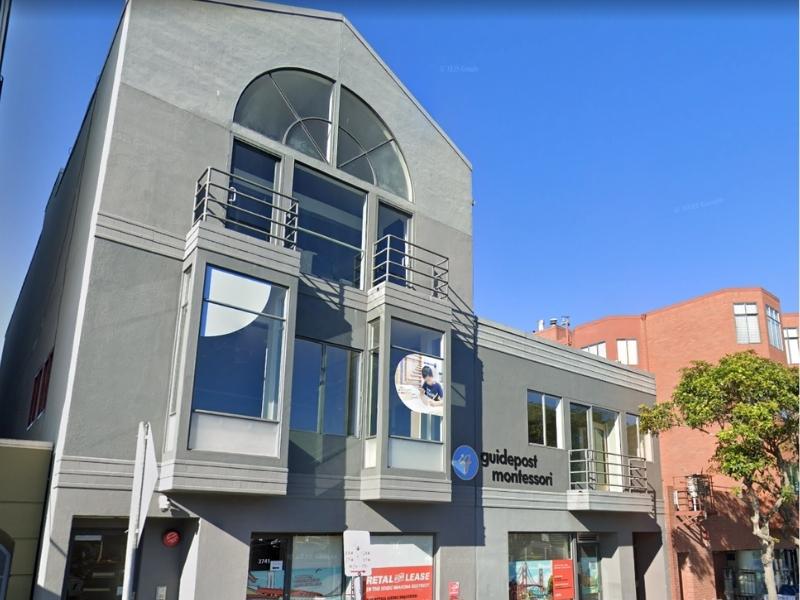
Alpha School San Francisco Reviews
The SF campus is the only Bay Area location with an actual year behind it, which makes it the only real evidence you have about the other two.
It launched in Fall 2025 with just 10 actively enrolled students, according to The Guardian's investigation — 25 families had put down deposits, but only 10 turned up on day one.
Niche shows a perfect 5.0 for Alpha SF. It is also a school of about 25 children whose parents chose an unconventional model on purpose and would very much like it to work out. That is not a rating. That is a group hug.
The early Austin Substack reviews and Astral Codex Ten accounts showed the same honeymoon pattern in year one, right before the longer-term curriculum complexities surfaced. To look past it, go to the academic metrics — our MAP data and curriculum legitimacy review does that properly.
At that scale every single review carries outsized weight, and the parent feedback splits.
🟢 What the families appreciate
Renewed enthusiasm. Kids who used to dread school now ask to go during holiday breaks. This mirrors the early Astral Codex Ten parent reviews and the Austin Substack accounts almost exactly. For a child who was quietly miserable in a traditional classroom, that shift is not a small thing.
Pacing. Multiple SF parents report kids moving through maths and reading modules at two to three times the rate of their old classrooms. For how those software loops actually work under the hood, see our curriculum and MAP data breakdown.
Logistics. The afternoon programming genuinely delivers. Bouldering at Benchmark Climbing Gym, public speaking workshops, outdoor biking — all coordinated, all on-site. That replaces two or three separate pickups, which if you have done a Bay Area weekday afternoon, you will recognise as a real product.
Guide proximity. A 1:5 ratio does things a teacher with 25 kids simply can't. That part isn't marketing.
🔴 What the skeptical families flag
When kids are falling behind
If your child hits a wall the software can't resolve, outside tutoring is entirely on you. Worth noting: WIRED found that Alpha's remote coaching staff were largely based in the Philippines and Colombia, not local credentialed specialists. All three describe the same pattern: the dashboard stays green while the gap quietly grows. Full detail in our investigative review.
The Writing Gap?
Parents describe the humanities framework as thin. AlphaWrite generates prompts but gives limited iterative feedback on voice, argument or revision — which happen to be the exact skills a UC personal statement is built on.
Peer Network v.s. What $75k Buys
A school this size cannot produce the peer network, the competitive academic culture, or the social range that a larger campus generates without trying. At this price point Alpha is competing with Nueva, Harker, Crystal Springs and Lick-Wilmerding — all with decades of outcomes behind them.
Expsoure v.s. Real Skills
Every parent who has done a season of competitive anything knows how this goes: school-coordinated swimming is exposure swimming. The vendor runs the recreational track, because that's what a general school partnership buys. If your kid turns out to actually love it, you're still in the car at 6am like the rest of us.
That said — letting a child roam across a dozen fields after two hours of core academics genuinely beats the alternative of sitting bored in a six-hour classroom. Both things are true.
The TimeBack beta
Co-founder Joe Liemandt has described TimeBack as a $100M+ operating system built to scale global education. What families get today is narrower: a background data layer that tracks pacing, sets daily goals and triggers gamified incentive charts. The conversational AI tutoring in the long-term pitch is still being engineered.
One detail the founders emphasise, and it's to their credit: TimeBack is deliberately chatbot-free. They tested conversational bots and scrapped them after students immediately worked out how to talk their way past levels.
But the infrastructure is explicitly in beta. For families paying a steep premium, that means your children are the foundational testers. Much like early Tesla buyers who paid a luxury price to fund a prototype roadmap — you are not buying a finished product.
No financial aid, and what that actually means
Alpha's SF campus cannot currently offer financial aid or tuition assistance. As The Guardian reported, a cohort of 25–30 students in a leased commercial space has no endowment, no alumni donation pool and no capacity for structural subsidy.
Your $75,000 is not buying entry into an established institution. It is funding a lean, venture-backed experiment.
There's a second-order effect worth sitting with. Established schools recruit and fund scholarship students, which broadens the intake. Alpha can't, which means the cohort is uniformly wealthy — and that makes the outcome data less readable, not more. Hold that thought for the college section.
The Royal Baseline V.S. Alpha School Palo Alto
Before we get to what $75,000 buys, it helps to know what it buys elsewhere.
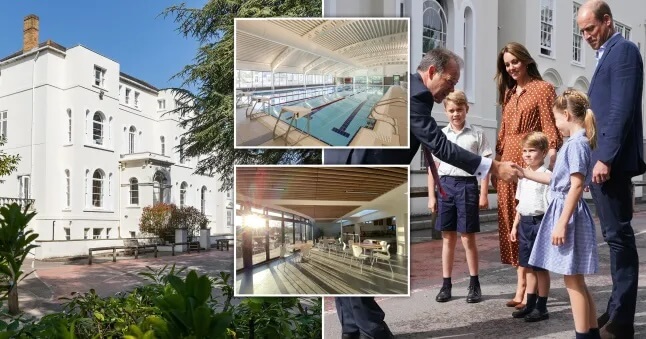
Lambrook School in Berkshire, England — the co-ed prep where Prince George is a pupil — runs $25,000 to $43,600 a year. For that, families get 52 acres of English countryside, a nine-hole golf course, a cricket pitch, a performing arts centre, a working farm, and credentialed teachers who have been placing pupils at Eton for generations. Plus the multi-generational network that prepares your child for the modern equivalent of the debutante circuit.
The future King of England attends school for less than half what Alpha charges for a retail unit on El Camino Real.
That is not automatically a dealbreaker — the two schools represent completely different bets about what education is for. But it's the right frame to hold while you evaluate the premium.
For context on how Bay Area private schools with actual campuses compare, see our complete Top Bay Area private schools guide.
The cost, stacked against the neighbours
Stack Alpha against the local field and the maths gets strange. It sits at the very top of Bay Area pricing while being the only premium option with no credentialed faculty, no traditional campus, and no verifiable university placement record.
Sources: individual school websites, Niche.com, PrivateSchoolReview.com (2025–2026)
For how these schools compare on what they actually build in a child — writing depth, emotional intelligence, grit — read our Alpha vs. Bay Area alternatives comparison. For homeschooling families, our Alpha Anywhere review breaks down the $833/month home stack.
📍 Palo Alto
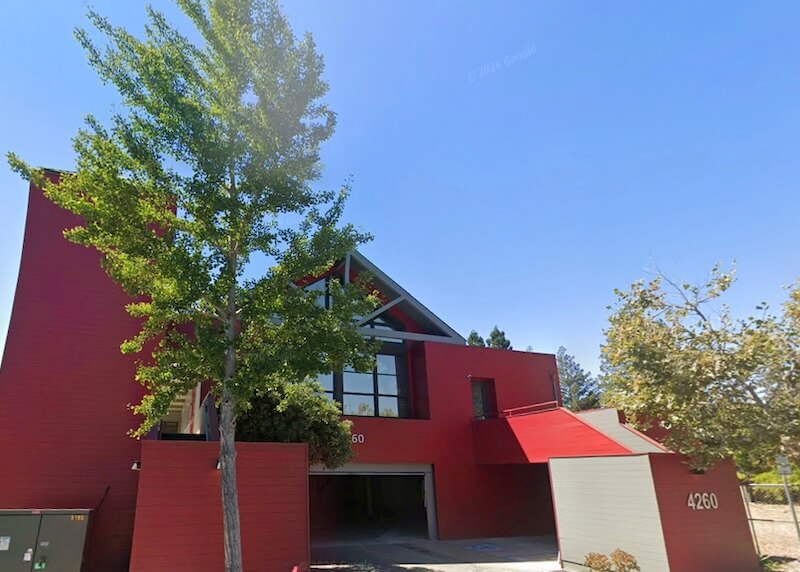
True to its asset-light startup model, Alpha’s Palo Alto location is a commercial lease rather than a property purchase. Operating out of a retail-faced space at 4260 El Camino Real, the footprint is small—roughly 5,000 to 7,000 square feet. Different from the sprawling courtyards, sport fields, or infrastructure of legacy Bay Area private schools - or public.
📍 Piedmont
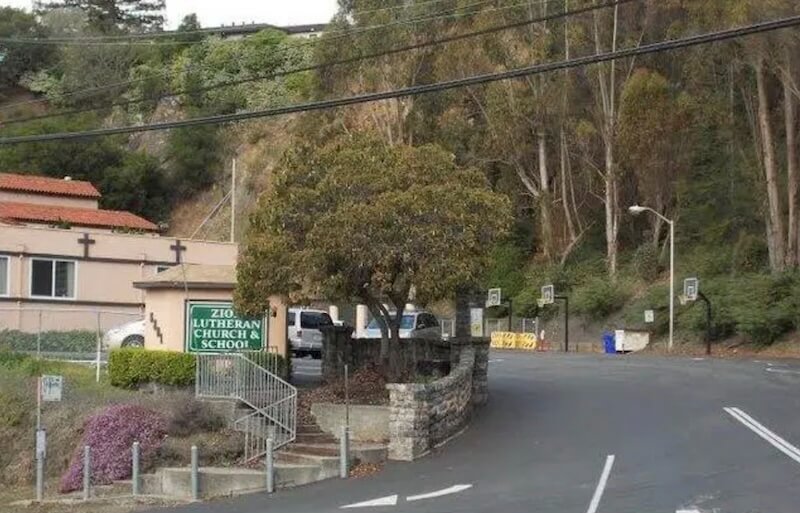
Before Alpha's acquisition, this space housed Academia de Mi Abuela, a local Spanish-immersion preschool. The building sits inside the physical real estate footprint of Zion Lutheran Church. Alpha has leased a neighborhood childhood unit and retrofitted it with digital adaptive screens.
What Chinese-American Families Are Saying on Xiaohongshu
The most candid, high-signal discussions regarding Alpha's value proposition aren't happening on English-language Reddit threads. They are happening on Xiaohongshu (小红书).
The initial cultural appeal among local Chinese-American parents is instant and completely genuine: "终于有学校认真对待STEM了" ("Finally a school that takes STEM seriously"). The promise of stripping away administrative bureaucracy, maximizing algorithmic efficiency, and letting a child accelerate through mathematics speaks directly to high-achievement family values.
To their credit, Alpha publishes their own independent MAP test data publicly — you can review the 2025 NWEA MAP Results and their mid-year report card directly. For full context on what those numbers mean — including the three structural filters that shape them — see our Alpha School curriculum and legitimacy review.
However, when you look past the initial excitement, three cultural and practical anxieties surface repeatedly:
1. Chidlren's eyes need distance
Pediatric ophthalmology research consistently links prolonged close-screen focus without regular distance-viewing breaks to rapid myopia progression in school-age children.
This is a well-documented concern in Chinese-American communities in particular, where rates of childhood myopia are already statistically elevated. A school environment where the entire academic block happens on laptops, indoors, inside a converted real estate office, introduces a real physical health consideration — not just an amenity complaint.
2. Some families prefer kids are exposed to different personality in big campus
3. Kids only learn when rewarded
This is a profound behavioral concern raised frequently on Xiaohongshu. It brings to mind the famous cautionary story of a Chinese child prodigy who was pushed to clear academic milestones via rigid, transactional reward tracking. He entered university at 10 and graduate school at 13, but by his late twenties, his internal motivation completely shattered. He now publicly advocates for total "lying flat" (tang ping), completely unmotivated and dependent on his parents.
Local parents are rightly asking: when you train a child's brain to constantly ask "How many Alpha Bucks is this worth?" before executing a task, do you permanently break their intrinsic love for learning over a ten-year horizon?
While Mackenzie Price argues that kids naturally outgrow the token economy after a year or two as pure curiosity takes over, it remains a critical psychological question you must monitor closely. We go deeper on the motivation research in our investigative review.
4. College Outcomes
The most-cited Alpha outcome is Kate Liemandt — co-founder Joe Liemandt's daughter, who scored 1600 on the SAT at Alpha Austin and went to Stanford, writing about it in the Austin Scholar newsletter. MacKenzie Price's daughters have gone to Vanderbilt and Parsons. Genuinely impressive, all of it.
They are also the founders' own children, from the school's earliest and most heavily resourced cohorts.
The sample-size problem
Here's the part analytically-minded parents will want to sit with. The families at Alpha SF include venture capitalists, tech founders and high-earning executives — children who tend to reach elite universities regardless of where they went to school, on the strength of parental networks and private supplemental tutoring.
That profile is not unique to Alpha. It describes the roster at every top Bay Area private school. The difference is scale. Harker has nearly 2,000 students and decades of data, so you can at least see a distribution and make some judgement about what the school contributes. Alpha SF has 25 to 30. At that size, the selection effect is the dataset. There is no way to separate what the school did from what the parents were always going to do.
Looking at Alpha's broader destinations across all campuses, Niche's tracking of Alpha High Austin shows most documented placements at regional flagships like UT Austin — not a sweeping wave of Ivy acceptances.
Alpha has repeatedly said it intends to publish a full audited matriculation record. As of August 2026, that document does not exist publicly.
AIFunLab Verdict
At $75,000 you are enrolling as an early adopter in a 25–30 student cohort in a leased storefront — no financial aid, no credentialed faculty, an unproven college track record, and core software still in live beta. The educational vision may eventually be proven right. But unlike most Silicon Valley bets, this one has your child sitting in the middle of it.
Best fit: self-directed learners whose families can absorb the cost without financial pressure and are genuinely aligned with an experimental, software-first model.
Not recommended if: college pipeline clarity, humanities depth, financial aid eligibility, or a proven institutional peer network matter to you.
Alpha's team contacted us in mid-2026. We were not paid for this review and Alpha had no editorial input.
Where families go next
- Bay Area private schools → — reviews by region, with the trade-off you won't hear on the tour
- Gifted & advanced schools → — genuine specialists vs. rigorous preps
- Dyslexia & learning differences → — verified Orton-Gillingham programs
- Bilingual & immersion schools → — Mandarin, Spanish, French, German and Italian, free options included
Alpha School Campuses: Palo Alto, Piedmont, & SF Campus FAQ
Is Alpha School Palo Alto worth $75,000?
Unclear — it opens Fall 2026 with no track record. The $75,000 buys a 4,800 sq ft leased storefront at 4260 El Camino Real, no gym, field or lab, and guides rather than credentialed teachers. MacKenzie Price told us it was waitlisted by April 2026. What $75K buys →
How much is Alpha School in the Bay Area?
Alpha Palo Alto and Alpha San Francisco charge $75,000 a year. Alpha East Bay in Piedmont charges $65,000. All three are K–8 except SF, which runs K–10. None offers financial aid — the campuses are leased commercial units with no endowment or alumni donor pool. Full tuition breakdown →
Does Alpha School Piedmont have any reviews?
No. As of August 2026, Alpha East Bay in Piedmont has no Niche entry, no Trustpilot reviews, and no independent parent reviews anywhere. It opens Fall 2026 at 5201 Park Blvd. We visited the site and are tracking the campus through its first year. Alpha Bay Area Campus Watch →
Where are Alpha School's Bay Area campuses?
Alpha San Francisco is at 3741 Buchanan St in the Marina, open now with 25–30 students. Alpha Palo Alto is at 4260 El Camino Real and Alpha East Bay at 5201 Park Blvd in Piedmont, both opening Fall 2026. Compare all three campuses →
How does Alpha School compare to Harker and Nueva?
Alpha SF charges $75,000 against Harker's $61,450 and Nueva's $62,560 — more money for under 0.25 acres versus their 58 and 43-acre campuses. Alpha has 25–30 students to Harker's 1,975, no credentialed faculty and no published college outcomes. Bay Area private schools guide →
References
- Alpha School: The $75K Hype That Failed Some Parents—and Kept Others by us
- Astral Codex Ten — 12-month parent review and longitudinal observations
- The Zvi (Substack) — Economic and incentive analysis of Alpha’s model
- Substack (multiple authors) — Brownsville parent’s four-part firsthand review, See links in the article.
- Hard Fork Podcast (New York Times) — Founder interviews and AI-in-education context
- Newsweek — Reporting on Alpha’s expansion and teaching model, 1 and 2
- Niche.com — Parent reviews (noting strong self-selection bias)
- Reddit — r/bayarea and r/sanfrancisco parent discussion threads
- ABC7 News — Bay Area expansion coverage

Derivatives, then startups — Hong Kong, London, Shanghai, now the Bay Area. MSc, LSE. Had my daughter at 40.

%20(300%20x%20250%20px)%20(1).avif)