What is a good critical thinking game for kids that uses AI?
What You'll Need
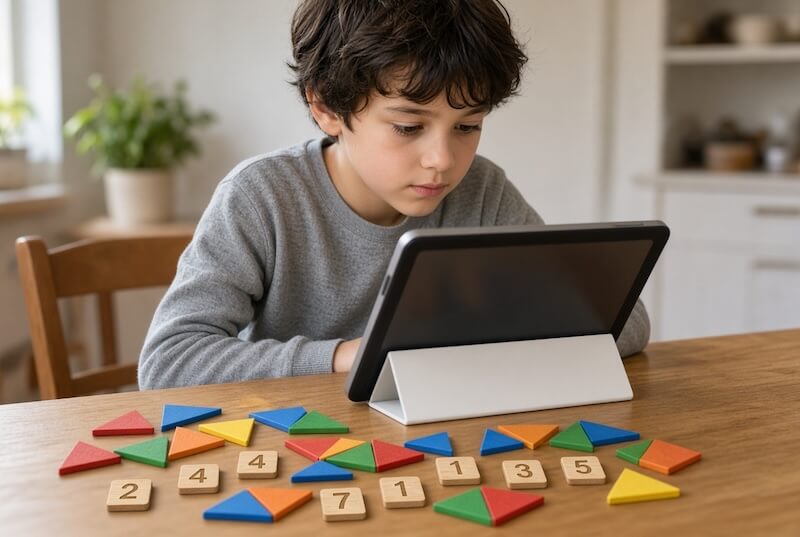
- A laptop or tablet with a web browser for Semantris (free, no account)
- One chatbot on a parent's account: ChatGPT (13+, parent permission under 18) or Gemini (13+, or under 13 if a parent turns it on in Family Link)
- A fact-checking source for Round 2: a book, an official website or a grown-up expert
- Paper and a pencil, or the printable score sheet below
- About 30 minutes

Heads up
For kids under 13, you type into the chatbot and read the answers aloud. Your kid writes the questions, makes the calls and keeps score. Age rules checked October 2026.
How to Do It
Three rounds, one question: can your kid beat the AI? In Round 1 they race a word-guessing AI. In Round 2 they catch a chatbot getting facts wrong. In Round 3 they write riddles to trip it up. Every point your kid scores comes from thinking harder than the machine.
The score sheet
Copy this onto paper or print this page. Fill in the Kid and Bot columns as you play.
| Round | How to score | Kid | Bot |
|---|---|---|---|
| 1. Word Wizard | 10 clues. Kid gets 1 point when the AI picks the right word on the first try; Bot gets 1 point when it picks the wrong one. | ____ | ____ |
| 2. Find the AI Mistake | 5 questions. Kid gets 1 point per mistake found, plus 1 bonus point for proving it. Bot gets 1 point per answer that checks out. | ____ | ____ |
| 3. Stump the Bot | 5 riddles or trick questions. Kid gets 1 point when the bot gets it wrong or makes something up. Bot gets 1 point when it's right or honestly says it doesn't know. | ____ | ____ |
| Final score | Add up each column. Most points wins. | ____ | ____ |
Round 1: Word Wizard (10 minutes)
- Open Semantris. Go to research.google.com/semantris in a browser. It's a free word association game from Google Research, with no account needed.
- Pick a mode. Arcade is fast-paced. Blocks is slower, which is better for younger kids or first-timers.
- Play 10 clues. In Arcade, the game highlights a target word; in Blocks, your kid picks a word on screen. Your kid types a clue that's related to it, and the AI decides which word matches the clue best. Score each clue on the sheet: right word on the first try is a Kid point, wrong word is a Bot point.
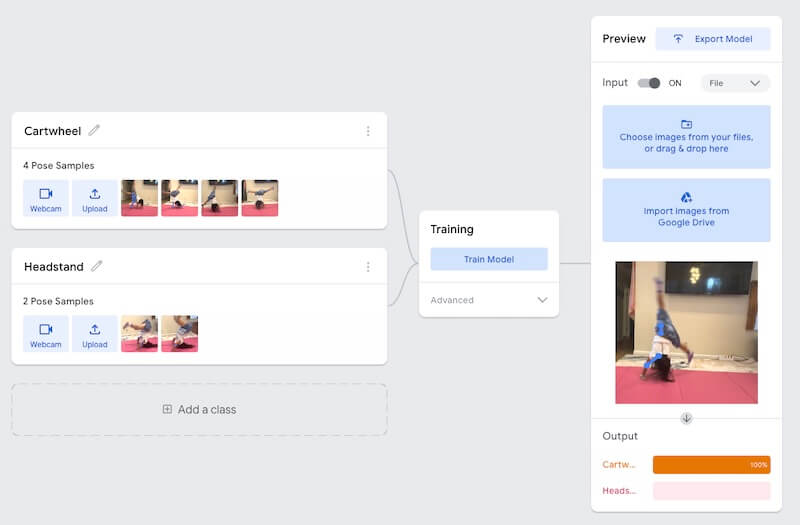
- Talk about the misses. When the AI picked the wrong word, ask why. It learned which words show up together in lots of writing; it can't read your kid's mind. Try synonyms, opposites or a movie reference and see what works. Kids who want to see how an AI learns from examples can train one on their dance moves.
Heads up
Semantris is a 2018 Google Research experiment. It was still online when we checked in October 2026, but Google has retired some of its sister experiments. If it won't load, play the chatbot version: give the chatbot a list of 8 words, then type a one-word clue and ask it to pick the word you mean. Same scoring.
Round 2: Find the AI Mistake (10 minutes)
- Pick a topic your kid knows cold. Pokémon, dinosaurs, a favorite book series, a sports team, your town's history. The more of an expert they are, the better.
- Ask the chatbot 5 questions. Mix 3 easy ones with 2 very specific ones, like "What happens in chapter 3 of book 4?" or "Which year did our town's library open?" Chatbots are most likely to slip on small details, local facts and recent news.
- Read the answers aloud. Your kid marks each one: right, wrong or not sure.
- Prove it. Check every "wrong" and "not sure" in a book, an official website or with a grown-up who knows. A mistake only counts for the bonus point if your kid can show where the right answer is.
Parent tip
If the chatbot gets all 5 right, that's still a win: your kid checked instead of trusting. Ask, "Did it sound just as sure when it was wrong?" Sounding confident and being right are not the same thing.
Round 3: Stump the Bot (10 minutes)
- Write 5 riddles or trick questions on paper first. The best ones are brand new. Ideas: a riddle your kid invents about something in your house, a question about a made-up word ("What does flimbertoast mean?"), a question only your family can answer ("What's my dog's name?"), or a counting puzzle about a long sentence your kid writes.
- Type each one exactly as written. No hints, no fixing typos.
- Score it. If the bot gets it wrong, makes up a meaning for the fake word, or guesses your dog's name, that's a Kid point. If it gets it right or honestly says it can't know, that's a Bot point.
- Compare old and new riddles. Try one famous riddle too. Chatbots usually get famous ones right because they've seen them many times. Your kid's original riddles are harder, and that shows the difference between remembering and figuring things out.
Final score and the big question
Add up the columns. Whoever wins, finish with one question: "When should we double-check what an AI tells us?" Let your kid write their own rule, like "Check it if it matters," and stick it on the fridge next to the score sheet.
Safety note
Keep real names, school names and your address out of the chatbot. For Round 3, family questions work because the bot can't know the answer, so you don't need to tell it anything private.
Try These Next
- 🧠 Critical Thinking Games for Kids → — seven more games, most with no screens at all
- 🚀 Free AI Study Games → — Beat the Bot and Find the Mistake with your kid's own school notes
- 🎤 AI Language Pal → — voice role-play to practice a new language
- 🎪 AI Birthday Party Game Kit → — kids design a trivia or treasure-hunt game
FAQ
Is Semantris still free to play?
Yes. Semantris was still online and free when we checked in October 2026. It runs in a web browser with no account or download. It's an older Google Research experiment, and Google has closed some of its sister projects, so if it ever stops loading, use the chatbot version of Round 1 described above.
What age is Outsmart the AI for?
Ages 8 and up. Semantris Arcade is fast, so younger players should start with Blocks mode; TeachersFirst lists Semantris for grades 4 to 12. Rounds 2 and 3 work for any child who can read and check facts with a parent. Kids under 13 play while a parent types into the chatbot.
Why should kids try to catch AI mistakes?
Because chatbots sound sure even when they're guessing. When kids catch a mistake about something they know well, they learn that AI answers need checking. That habit carries over to homework, search results and videos, which is the core of critical thinking.
Do I need a paid chatbot for this game?
No. The free versions of ChatGPT and Gemini work for Rounds 2 and 3, and Semantris is free. ChatGPT is 13+ with a parent's permission under 18, and Gemini can be turned on for under-13s through Family Link (checked October 2026).
Sources
Checked October 2026.
- Google Research: Semantris
- Google Research: Semantic Experiences (status of Semantris and retired experiments)
- Experiments with Google: Semantris
- TeachersFirst review of Semantris (grades 4 to 12)
- OpenAI terms of use (age 13+)
- Google: Gemini Apps for kids with Family Link
Keep reading
Find more AI fun projects for kids here.