

Which is better for my child: RSM, Mathnasium, Kumon or AoPS?
Every Bay Area parent hears the same four names: RSM, Mathnasium, Kumon and AoPS. They get talked about as four versions of the same math class. They aren't. Each one sells something different, and each asks something different of your child and of you. Here's what a session looks like, how much comes home, what it costs, and which kind of kid each one tends to fit.
What you're actually buying
None is better in general. The wrong fit can be frustrating even at a well-regarded center.
Start with your child, not the brand
If two rows fit, choose the one that describes your child on a hard day, not a good one.
How each one works
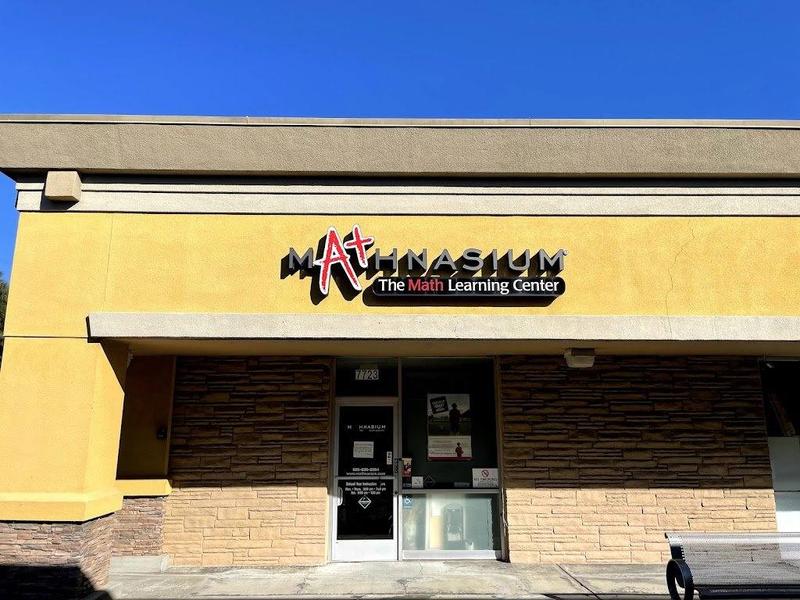
Mathnasium: help nearby, not a mini-class
Your child works through a binder built from an initial assessment. Kids at the same table may be on completely different topics while instructors move between them. The advertised "1:3" is how many students each instructor is helping at once, and it shifts with the day and hour. Twice a week buys two sessions with help nearby, not two private lessons, which is why it costs less than private tutoring. Check the session count too: Mathnasium Pleasanton's plans include 9 sessions a month.

"My kid, who hates school math, loves going there." — Berkeley Parents Network, 2021
Kumon: the worksheet is the method
Kumon is a practice program more than a class. Its parent guide describes two center visits a week and worksheets at home the other five days, about 30 minutes a day per subject. Instructors "assess, guide and encourage," and the worksheets are designed so children work out each new step themselves. The repetition is deliberate: a child who needs speed and independence can do well with it, and a child who wants to ask why may find it dull.
"It's a bit of a grind, but it will slowly but surely solve whatever math issues he has." — Berkeley Parents Network, 2021
Parent tip
Much of Kumon happens at your kitchen table. Someone has to check worksheets and keep the routine going five days a week. Count that time before you sign up.
RSM: a curriculum, not this week's weak spot
RSM teaches its own curriculum in order, not just whatever your child is stuck on this week. Children join a class at their level, about 12 students on average at RSM Pleasanton, with three levels per grade and weekly homework. Class time grows with age, from about 1.5 hours a week in kindergarten to 2 to 4 hours in high school, according to RSM San Francisco. It can feel like a second math school, and parents report both strong progress and real stress.

One child "initially found it very stressful" but stayed four years, and RSM "made them a lot better at solving problems." — Berkeley Parents Network, 2022
AoPS Academy: the problem comes before the method
Your child meets a problem before the method, tries approaches, and talks them through with about 13 classmates and a teacher. Expect 1 to 1.5 hours of homework a week. Elementary classes use AoPS's own Beast Academy books and older students use Art of Problem Solving textbooks (not Singapore Math, a common mix-up).
Could you just buy the books? Both are sold to the public, so for some families, yes. Tuition adds a teacher, classmates to argue with, a set pace and feedback. If your child would work through Beast Academy at home without a fight, you may not need the class.
What it costs
Each center sets its own prices. These are published prices we checked on official pages in October 2026, with the yearly math done for you. Ask your local center for its current sheet.
The surprise: a year of AoPS costs about half a year-round Mathnasium Pleasanton plan. It's also far fewer hours with a teacher, about $82 per AoPS class against about $55 per Mathnasium session, so compare what each hour gives your child. Whichever you choose, get the minimum term, cancellation notice and fees in writing.
What it asks of you
This is our read of each program's own description and parent accounts, not a measurement. On RSM, one Berkeley parent wrote in 2022 that "no parental involvement is required" because homework applies the class lesson. That holds when placement is right.
How to tell if it's working
No independent study compares these programs' long-term results, and figures like RSM's AMC 8 numbers come from the programs themselves. Watch for these signs in the first few months instead.
Math in an AI world: what each one builds
In July 2025, AI systems from Google DeepMind and OpenAI each scored a gold-medal 35 out of 42 at the International Mathematical Olympiad. Getting an answer is now cheap. Knowing what to ask, spotting a wrong answer and reasoning through something new matter more, and each program trains a different piece of that:
- Kumon: fluency. A child who knows 7 × 8 instantly notices when a chatbot is off by a factor of ten.
- Mathnasium: foundations. Gaps from second grade block algebra later, AI or not.
- RSM: structured reasoning. Multi-step methods, learned early and in order.
- AoPS Academy: problem solving. Tackling an unfamiliar problem and explaining why an approach works.
Whichever you choose, ask your child to explain why, not just what. For AI at home that doesn't do the thinking for them, see our guide to AI homework helpers.
Is the closest center the right one?
Not always. Mathnasium and Kumon are franchises, so each center depends on who runs it. RSM and AoPS run their own branches, so the curriculum is more consistent, though teachers still vary. Options also depend on where you live: of RSM's 22 Bay Area branches, 11 are in the South Bay, 2 on the Peninsula, 7 in the East Bay and 2 in San Francisco.
"We live in Berkeley and bypass closer locations to attend her El Cerrito school." — Berkeley Parents Network, on Kumon
We see the same in the Tri-Valley, where some families drive past the nearest Mathnasium for one whose schedule or staff suits their child better. Every Bay Area location is listed by region in our math programs guide.
Before you sign: six questions and one visit
- How many kids will be at my child's table or in their class, on our day and time?
- Who will teach my child most weeks, and how often do instructors change?
- What exactly did the placement test show? Ask for specific gaps or strengths, not just a level name.
- What happens when my child is stuck? Listen for explaining and questioning, not "they move to the next page."
- What has to happen at home each week, and what is my part?
- What does it cost to leave? Minimum term, cancellation notice and fees, in writing.
Then visit during the after-school rush. At Mathnasium and Kumon, watch how long a stuck child waits for help. At RSM and AoPS, watch whether kids are talking and trying, or just copying.
Parent tip
Book two trials in the same week. How your child talks about each one on the drive home tells you more than any sales conversation.
What Bay Area parents ask
Which is better, RSM or AoPS?
RSM suits a motivated child who wants a structured path well ahead of school. AoPS suits a child who loves hard, unfamiliar problems and discussion. Some families try one and switch.
Is Mathnasium or Kumon better for a child who is behind?
For most kids, Mathnasium, because it targets the gaps and keeps the work at the center. Kumon fits better when the problem is speed or careless errors.
Which is best for AMC 8 or MATHCOUNTS?
AoPS Academy runs dedicated AMC 8/MATHCOUNTS and AMC 10/12 classes, and RSM has a selective competition program. Mathnasium and Kumon aren't built for contest prep.
Can we do any of these online?
Yes. RSM runs RSM Online, AoPS has an online school separate from its Academy, and some Mathnasium centers offer live sessions called Mathnasium@home. We're comparing online and AI options in a separate guide.
Looking for other programs, like Think Academy, or free options? See our main math programs guide and our guide to free math circles and volunteer tutoring.



%20(300%20x%20250%20px)%20(1).avif)



-min.avif)